Greenland and Its Unique Wildlife: Life at the Edge of the Arctic World
Greenland is one of the most fascinating and remote places on Earth. Located between the Arctic and Atlantic Oceans, this vast island is known for its dramatic icy landscapes, towering glaciers, deep fjords, and extreme climate. Yet beyond the ice and snow lies a surprisingly rich and resilient world of wildlife. Greenland’s unique animals have evolved extraordinary adaptations that allow them to survive in one of the harshest environments on the planet. From massive marine mammals to elusive Arctic predators and hardy bird species, Greenland’s wildlife is a testament to nature’s ability to endure and thrive under extreme conditions.
This article explores Greenland’s geography and climate, the ecosystems that shape its wildlife, and the remarkable species that call this icy land and surrounding seas home.
Greenland: A Land of Ice, Fjords, and Extremes
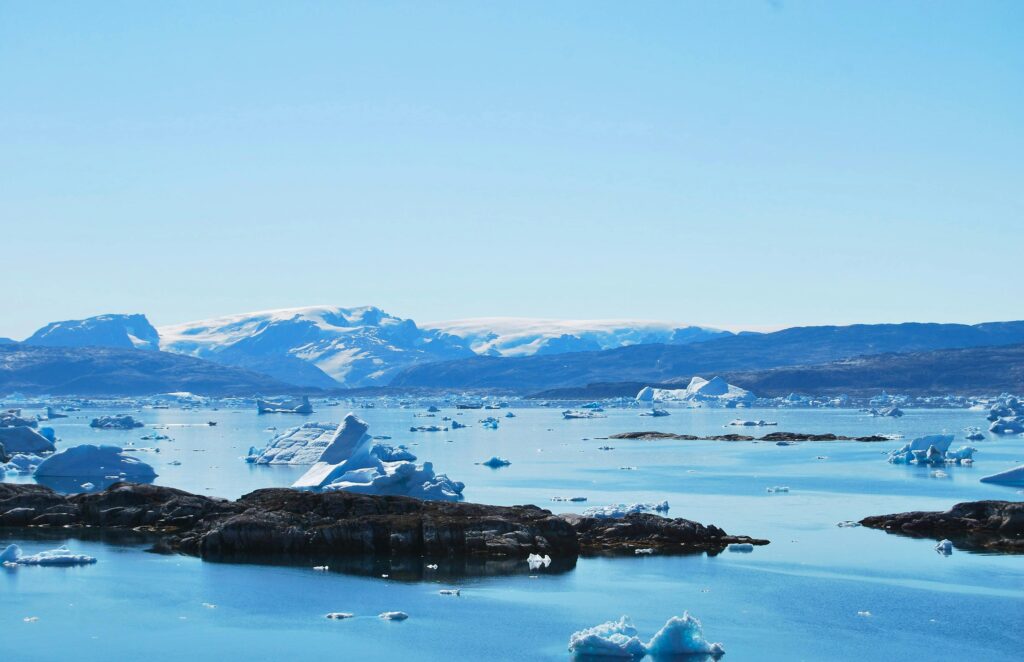
Greenland is the world’s largest island, covering more than 2.1 million square kilometers. Approximately 80 percent of its surface is covered by the Greenland Ice Sheet, the second-largest body of ice on Earth after Antarctica. The remaining land consists of rocky coastlines, tundra, mountains, and fjords carved by ancient glaciers.
The climate in Greenland is predominantly Arctic, with long, cold winters and short, cool summers. Temperatures can drop below -30°C in winter, while summer temperatures rarely exceed 10°C in most regions. Despite these extreme conditions, life persists, adapting in remarkable ways to limited sunlight, frozen terrain, and scarce vegetation.
Arctic Ecosystems of Greenland
Greenland’s wildlife is shaped by a few key ecosystems:
1. Arctic Tundra
The tundra ecosystem dominates Greenland’s ice-free areas. It consists of low-growing vegetation such as mosses, lichens, grasses, and small shrubs. Trees cannot grow here due to permafrost and short growing seasons. Despite its simplicity, the tundra supports herbivores like musk oxen and Arctic hares, which in turn sustain predators such as Arctic foxes.
2. Marine Ecosystems
The seas surrounding Greenland are among the richest marine environments in the Arctic. Cold, nutrient-rich waters support plankton, fish, seals, whales, and seabirds. Sea ice plays a critical role, serving as hunting platforms for polar bears and breeding grounds for seals.
3. Coastal and Fjord Systems
Greenland’s long coastline and deep fjords provide nesting areas for birds and feeding grounds for marine mammals. Seasonal ice melt brings nutrients into these waters, supporting complex food chains.
Iconic Land Mammals of Greenland
Polar Bears: Kings of the Arctic
The polar bear is Greenland’s most famous animal and a powerful symbol of the Arctic. These massive carnivores depend heavily on sea ice to hunt seals, their primary food source. Greenland is home to several polar bear populations, particularly along the east and northwest coasts.
Polar bears are superbly adapted to the cold. Their thick fur, black skin, and layers of fat provide insulation, while their large paws help distribute weight on ice and act as paddles for swimming. Despite their strength, polar bears are vulnerable to climate change, as melting sea ice reduces their hunting grounds.
Musk Oxen: Survivors of the Ice Age
Musk oxen are ancient animals that have lived in Arctic regions since the last Ice Age. With their long shaggy coats and strong bodies, they are perfectly suited to Greenland’s cold tundra. Musk oxen feed on grasses, mosses, and lichens, using their hooves to dig through snow.
These animals are known for their defensive behavior. When threatened, they form a protective circle, with calves in the center and adults facing outward, ready to charge predators such as wolves.
Arctic Foxes: Masters of Adaptation
The Arctic fox is one of Greenland’s most adaptable mammals. It survives in conditions that would be deadly to most animals. Arctic foxes change the color of their fur with the seasons—white in winter to blend with snow and brown or gray in summer to match the tundra.
They are opportunistic feeders, eating small mammals, birds, eggs, fish, and carrion. Arctic foxes often follow polar bears to scavenge leftovers from seal kills.
Arctic Hares: Speed and Survival
Arctic hares are well adapted to Greenland’s open tundra. They have thick fur, short ears to reduce heat loss, and powerful hind legs that allow them to run at high speeds to escape predators. During winter, their white coats provide excellent camouflage against the snow.
Marine Mammals of Greenland’s Waters
Whales: Giants of the Arctic Seas
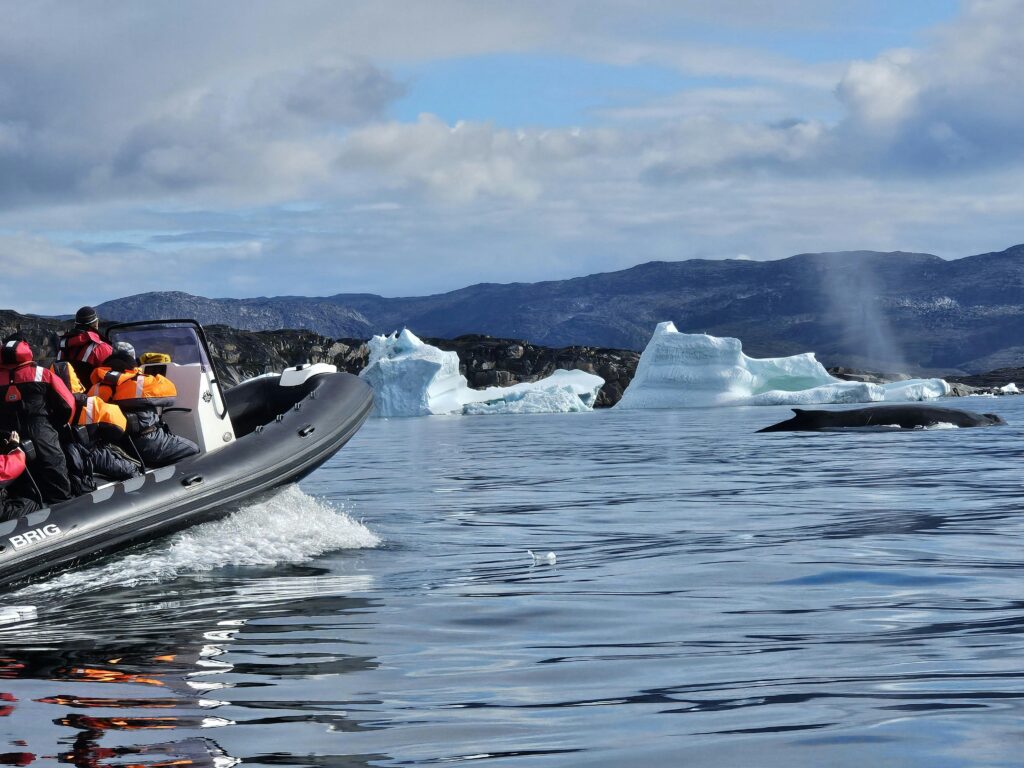
Greenland’s surrounding waters host a variety of whale species, making it one of the best places in the Arctic for whale diversity.
Bowhead Whales are among the longest-living mammals on Earth, with lifespans exceeding 200 years. They are well adapted to icy waters and can break through sea ice with their massive skulls.
Humpback Whales migrate to Greenland’s waters during summer to feed on fish and krill.
Narwhals, often called the “unicorns of the sea,” are famous for the long spiral tusk found in males. These elusive whales are closely associated with Arctic ice.
Beluga Whales are known for their white coloration and vocal behavior. They often travel in groups and inhabit coastal waters and fjords.
Seals: Foundation of the Arctic Food Chain
Seals are critical to Greenland’s ecosystems. Species such as ringed seals, harp seals, and bearded seals depend on sea ice for breeding and resting. They are a primary food source for polar bears and an important part of Inuit subsistence hunting traditions.
Birdlife in Greenland
Despite its harsh climate, Greenland supports a surprising variety of bird species, particularly during the summer months when migratory birds arrive to breed.
Seabirds
Greenland’s cliffs and coastal areas are home to large colonies of seabirds, including:
Atlantic Puffins
Guillemots
Razorbills
Kittiwakes
These birds feed on fish and spend much of their lives at sea, coming ashore only to nest.
Birds of Prey
The Gyrfalcon, the world’s largest falcon, is Greenland’s national bird. It is a powerful predator that hunts birds and small mammals. The snowy owl is another iconic species, perfectly camouflaged against the Arctic landscape.
Fish and Invertebrates: Hidden Life Beneath the Ice
Greenland’s cold waters support a variety of fish species, including Arctic cod, halibut, and Greenland shark. The Greenland shark is particularly remarkable, believed to be one of the longest-living vertebrates on Earth, with lifespans estimated at over 250 years.
Plankton and small invertebrates form the base of the marine food web, supporting fish, seabirds, and marine mammals.
Seasonal Rhythms of Wildlife
Greenland’s wildlife follows strict seasonal patterns driven by light and temperature.
Winter is a time of survival. Many animals reduce activity, rely on fat reserves, or migrate.
Spring marks the return of sunlight and breeding season for many species.
Summer is a period of abundance, with increased plant growth and marine productivity.
Autumn is a time of preparation, as animals build fat reserves for winter.
Indigenous Knowledge and Wildlife
The Inuit people of Greenland have lived alongside Arctic wildlife for thousands of years. Their traditional knowledge includes detailed understanding of animal behavior, migration patterns, and seasonal changes. Hunting has historically been essential for survival, providing food, clothing, and tools.
Today, many Greenlanders continue sustainable hunting practices, guided by both tradition and modern conservation laws.
Conservation and Climate Change Challenges
Greenland’s wildlife faces increasing threats from climate change. Rising temperatures are causing rapid ice melt, altering habitats and food availability. Species that depend on sea ice, such as polar bears and ringed seals, are particularly at risk.
Other challenges include increased shipping, resource exploration, and pollution. Conservation efforts focus on monitoring wildlife populations, protecting critical habitats, and balancing economic development with environmental protection.
Why Greenland’s Wildlife Matters
Greenland’s wildlife is not only unique but also globally important. The Arctic plays a crucial role in regulating Earth’s climate, and changes in Greenland’s ecosystems can have far-reaching effects. Studying Greenland’s animals helps scientists understand adaptation, resilience, and the impacts of climate change.
Moreover, Greenland’s wildlife represents a rare glimpse into a world where nature still dominates, reminding humanity of the importance of protecting fragile ecosystems.
Conclusion
Greenland is far more than a frozen wilderness. It is a living, dynamic environment filled with remarkable wildlife that has adapted to survive at the edge of habitability. From polar bears stalking seals on drifting ice to whales navigating icy fjords and birds nesting on sheer cliffs, Greenland’s animals tell a powerful story of endurance and balance.
As climate change reshapes the Arctic, the future of Greenland’s wildlife depends on global awareness, responsible stewardship, and respect for both nature and indigenous traditions. Preserving this extraordinary ecosystem is not just about saving animals—it is about protecting one of Earth’s most vital and awe-inspiring regions.