HI, I am Ratnesh. My hobby is content writing in the Russian warplane in Alaska.but my thought is war will end very soon when the country table talks and compromise with disputed topic.I hope that readers would like me and comment on it.
Russian Warplane in Alaska: Strategic Tensions, Airspace Encounters, and Arctic Security Dynamics
The sighting of a Russian warplane near Alaska often makes headlines in the United States and around the world. These encounters are not random events; they are deeply rooted in geopolitics, military strategy, and the unique geography of the Arctic region. Alaska, the northernmost state of the United States, sits just across the Bering Strait from Russia, making it one of the most strategically sensitive regions on Earth. When Russian military aircraft approach Alaskan airspace, it is not merely a routine flight—it is a calculated maneuver that reflects broader global power dynamics.
This comprehensive article explores the history, context, aircraft types, military strategy, air defense systems, international law, and future implications of Russian warplane activity near Alaska.
Geographic Importance of Alaska
Alaska’s proximity to Russia makes it a frontline state in terms of air defense and military monitoring. The narrowest distance between Alaska and Russia is about 55 miles across the Bering Strait. This short gap means aircraft traveling from eastern Russia can approach North American airspace relatively quickly.
During the Cold War, Alaska served as a major defense buffer zone between the United States and the Soviet Union. Even today, its strategic location makes it essential for early warning systems, missile defense, and air patrol operations.
Historical Background: Cold War Legacy
Russian warplane activity near Alaska is not new. During the Cold War, Soviet bombers frequently tested American air defenses by flying near the Air Defense Identification Zone (ADIZ) of Alaska. These flights were often intercepted by U.S. fighter jets.
After the collapse of the Soviet Union in 1991, such activities decreased for several years. However, in the mid-2000s, Russia resumed long-range bomber patrols as part of its effort to reassert military presence globally.
The tension between the United States and Russia continues to influence these operations today.
The Role of the Air Defense Identification Zone (ADIZ)
It is important to understand that most Russian warplanes detected near Alaska do not enter U.S. sovereign airspace. Instead, they fly within the Air Defense Identification Zone (ADIZ), an area beyond U.S. territorial airspace where aircraft must identify themselves for security purposes.
The ADIZ is not sovereign airspace, but it requires identification for national security reasons. When Russian military aircraft enter this zone without prior notification, the U.S. military responds by scrambling fighter jets to intercept and visually identify them.
Common Russian Warplanes Near Alaska
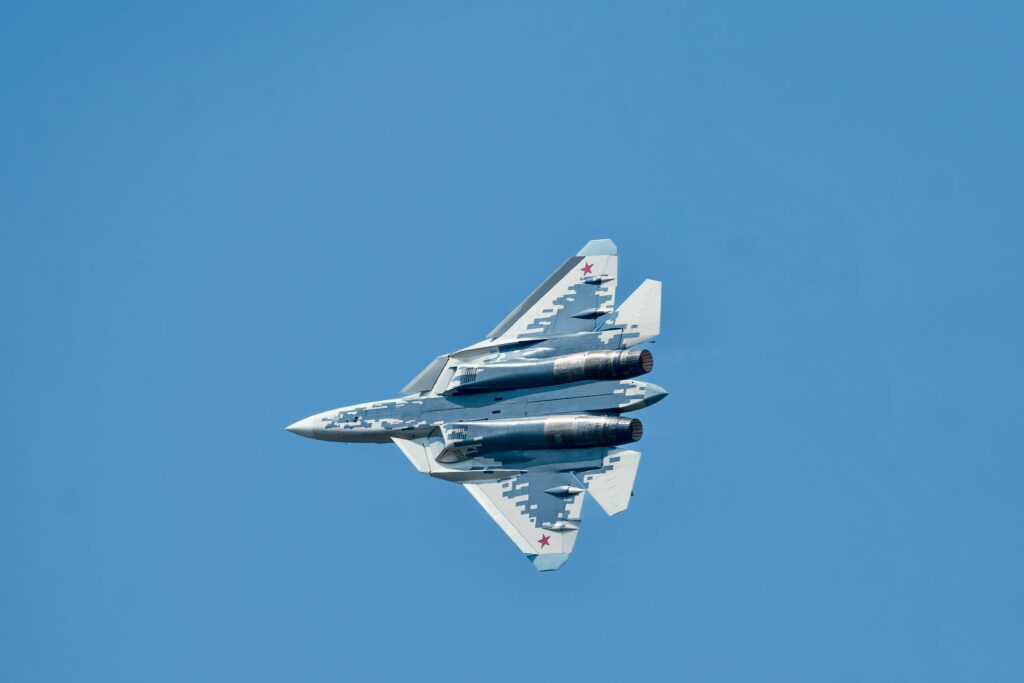
Several types of Russian military aircraft have been observed near Alaska over the years. These include long-range bombers and reconnaissance aircraft.
1. Tupolev Tu-95
The Tu-95, known by NATO as “Bear,” is a long-range strategic bomber powered by turboprop engines. It has been in service since the 1950s but remains active in Russia’s strategic aviation fleet. Its long range allows it to conduct patrols near North America without refueling.
2. Tupolev Tu-160
The Tu-160, known as “Blackjack,” is a supersonic strategic bomber capable of carrying nuclear and conventional cruise missiles. It represents one of Russia’s most advanced long-range bombers.
3. Tupolev Tu-142
The Tu-142 is used for maritime reconnaissance and anti-submarine warfare. It is occasionally detected near Alaska due to increased naval activity in Arctic waters.
4. MiG-31
The MiG-31 is a high-speed interceptor capable of escorting bombers or performing long-range patrols in Arctic regions.
U.S. Response: NORAD and Interceptions
The primary organization responsible for monitoring Russian aircraft near Alaska is North American Aerospace Defense Command (NORAD). NORAD is a joint U.S.-Canada military command that monitors aerospace threats over North America.
When Russian aircraft approach the ADIZ, NORAD often scrambles fighter jets such as the F-22 Raptor from bases in Alaska to intercept and escort them.
The main air base responsible for these operations is Joint Base Elmendorf-Richardson, located near Anchorage.
Interceptions typically involve:
Visual identification of the aircraft
Monitoring flight behavior
Escorting the aircraft until it leaves the ADIZ
These encounters are usually professional and non-confrontational.
Why Does Russia Conduct These Flights?
Russian military patrols near Alaska serve multiple purposes:
1. Strategic Signaling
Such flights demonstrate Russia’s ability to project power and reach North American airspace.
2. Training and Readiness
Long-range patrols provide valuable training for pilots operating in Arctic conditions.
3. Testing U.S. Defenses
These missions help Russia gather intelligence on U.S. response times and air defense procedures.
4. Arctic Competition
The Arctic is becoming increasingly important due to melting ice, shipping routes, and natural resources. Russia has heavily militarized its Arctic region, and patrols near Alaska reinforce its strategic posture.
The Arctic as a Strategic Battlefield
The Arctic region has transformed from a frozen frontier into a zone of geopolitical competition. As climate change reduces sea ice, new shipping routes like the Northern Sea Route become viable. Natural resources, including oil and gas reserves, are also more accessible.
Russia has invested heavily in Arctic bases, radar systems, and airfields. The United States has also increased its military presence in Alaska to maintain balance.
This competition makes Russian warplane activity near Alaska part of a larger Arctic security framework.
Legal and Diplomatic Considerations
International aviation law allows military aircraft to fly in international airspace. As long as Russian planes remain outside U.S. sovereign airspace (12 nautical miles from the coastline), they are not violating international law.
However, flying without proper transponder signals or communication increases the risk of accidents.
Diplomatic protests sometimes follow major incidents, but both countries generally avoid escalation.
Frequency of Incidents
The number of Russian aircraft approaching Alaska varies by year. In some years, NORAD reports dozens of interceptions. These flights often increase during periods of political tension between Washington and Moscow.
However, most encounters follow predictable patterns and remain controlled.
Impact on U.S. National Security
Russian warplane activity near Alaska has several implications:
Reinforces the importance of maintaining advanced fighter aircraft in Alaska
Justifies modernization of radar systems
Supports increased Arctic military funding
Encourages stronger cooperation between the U.S. and Canada
The presence of advanced aircraft like the F-22 ensures rapid response capability.
The Human Side: Pilots and Interceptions
For pilots on both sides, these encounters are part of routine military operations. American and Russian crews are trained to follow international intercept protocols to avoid misunderstandings.
Often, intercepting pilots report that encounters are professional, with no aggressive maneuvers.
Media Coverage and Public Perception
When headlines report “Russian warplane near Alaska,” it often creates alarm. However, most of these incidents occur in international airspace and are part of long-standing military practices.
Media coverage sometimes exaggerates the immediacy of threat, but defense officials usually clarify that there was no violation of U.S. airspace.
Technological Advancements
Modern Russian bombers are equipped with advanced navigation and missile systems. Meanwhile, U.S. air defenses use sophisticated radar networks and satellite systems to detect aircraft long before they approach Alaska.
Future developments may include:
Hypersonic missiles
Enhanced Arctic radar systems
Autonomous drone patrols
These technologies could change the nature of Arctic air encounters.
Risk of Miscalculation
Although most intercepts are routine, there is always a small risk of miscommunication or miscalculation. Close encounters in the air can escalate if pilots misinterpret actions.
To reduce risk, both countries maintain military communication channels and established intercept procedures.
Alaska’s Growing Military Importance
Alaska hosts some of the most advanced U.S. military assets. In addition to fighter jets, the state also supports missile defense systems designed to intercept potential ballistic missile threats.
The strategic importance of Alaska continues to grow as Arctic competition intensifies.
Future Outlook
Russian warplane activity near Alaska is likely to continue. As global tensions fluctuate, so will the frequency of patrols. The Arctic will remain a critical strategic zone for both nations.
Key future trends may include:
Expanded Arctic military bases
Increased joint exercises
Greater investment in air defense technologies
Diplomatic efforts to prevent escalation
Conclusion
Russian warplanes near Alaska represent more than isolated military flights. They symbolize enduring geopolitical rivalry, Arctic competition, and strategic signaling between two major nuclear powers. While most encounters are routine and occur in international airspace, they underscore the importance of vigilance and readiness.
Alaska remains a key pillar in North American defense strategy. As technology evolves and Arctic competition intensifies, these aerial encounters will continue to shape global security discussions.
The balance between deterrence and diplomacy will determine whether these interactions remain controlled displays of military presence—or become flashpoints in a rapidly changing world.
In the modern era, Russian warplanes in Alaska’s vicinity are not simply aircraft in the sky; they are visible reminders of global power politics unfolding over the frozen Arctic frontier.