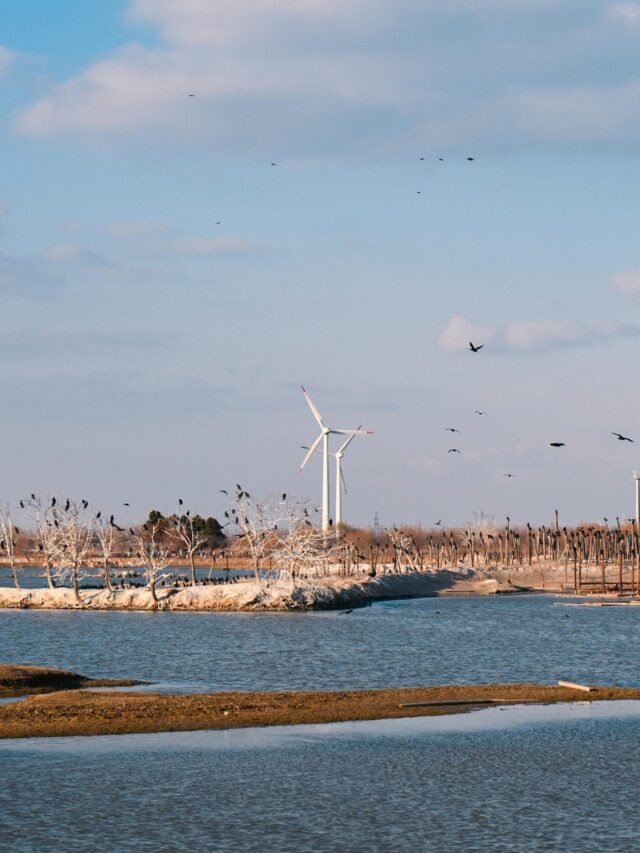
Wind Turbines: Powering the Future with Clean and Renewable Energy
Wind turbines have become one of the most recognizable symbols of renewable energy in the modern world. Rising tall across plains, coastlines, and offshore waters, these elegant machines convert the invisible force of wind into usable electricity. As nations seek cleaner alternatives to fossil fuels, wind turbines are playing a central role in the global transition toward sustainable energy systems. This article explores wind turbines in detail, covering their history, working principles, types, components, benefits, challenges, economic impact, environmental considerations, and future potential.
1. Introduction to Wind Turbines
A wind turbine is a device that converts the kinetic energy of wind into mechanical energy and then into electrical energy. Unlike traditional power plants that burn coal, oil, or gas, wind turbines generate electricity without producing greenhouse gas emissions during operation. This makes them an essential tool in combating climate change and reducing dependence on non-renewable energy sources.
Wind energy is not a new concept. Humans have used wind power for thousands of years, first for sailing and later for grinding grain and pumping water. Modern wind turbines, however, represent a highly advanced form of this ancient idea, combining aerodynamics, materials science, electronics, and digital control systems.
2. History and Evolution of Wind Turbines
Early Uses of Wind Power
The earliest wind-powered machines date back to around 200 BCE in Persia, where simple windmills were used to grind grain. By the Middle Ages, windmills had spread across Europe, particularly in countries like the Netherlands, where they were used for water management and agriculture.
Birth of Modern Wind Turbines
The first electricity-generating wind turbine was built in the late 19th century. In 1887, Scottish engineer James Blyth constructed a wind turbine to power his home. During the early 20th century, small wind generators were used in rural areas where grid electricity was unavailable.
Technological Advancements
The oil crises of the 1970s renewed interest in wind energy, leading to increased research and development. Over the past few decades, wind turbines have grown significantly in size, efficiency, and reliability. Today’s turbines are capable of producing several megawatts of power each, supplying electricity to thousands of homes.
3. How Wind Turbines Work
The operation of a wind turbine is based on simple physical principles, though the technology itself is highly sophisticated.
Basic Working Principle
When wind flows over the blades of a turbine, it creates lift, similar to how airplane wings work. This lift causes the blades to rotate. The rotating blades turn a shaft connected to a generator, which converts mechanical energy into electrical energy.
Step-by-Step Process
Wind blows over the blades, causing them to spin.
The rotor turns, transferring energy to a low-speed shaft.
A gearbox increases rotational speed (in many designs).
The generator produces electricity.
Power electronics condition the electricity for grid compatibility.
Electricity is transmitted through cables to homes, businesses, and industries.
4. Main Components of a Wind Turbine
A modern wind turbine consists of several key components, each playing a vital role in energy generation.
Rotor Blades
Rotor blades capture wind energy. Most turbines have three blades, as this design offers the best balance between efficiency, stability, and noise reduction.
Nacelle
The nacelle sits at the top of the tower and houses critical components such as the gearbox, generator, brake, and control systems.
Tower
The tower supports the turbine and elevates it to higher altitudes where winds are stronger and more consistent.
Generator
The generator converts mechanical rotation into electrical power. Some turbines use traditional induction generators, while others use advanced permanent magnet generators.
Control System
Sensors and controllers monitor wind speed, direction, and turbine performance, adjusting blade angles and orientation for optimal efficiency and safety.
5. Types of Wind Turbines
Wind turbines can be classified based on their axis of rotation, location, and application.
Horizontal Axis Wind Turbines (HAWT)
These are the most common type. They have blades that rotate around a horizontal axis and face directly into the wind.
Advantages:
High efficiency
Mature technology
Suitable for large-scale power generation
Disadvantages:
Require yaw mechanisms to face the wind
Larger footprint
Vertical Axis Wind Turbines (VAWT)
These turbines rotate around a vertical axis and can capture wind from any direction.
Advantages:
No need for wind direction alignment
Suitable for urban or rooftop installations
Disadvantages:
Lower efficiency
Less common and less developed
Onshore Wind Turbines
Installed on land, onshore turbines are widely used due to easier installation and maintenance.
Offshore Wind Turbines
Located in oceans or large lakes, offshore turbines benefit from stronger and steadier winds but are more expensive to build and maintain.
6. Wind Turbine Sizes and Power Ratings
Wind turbines come in various sizes, designed for different applications.
Small Wind Turbines
Power output: Up to 100 kW
Used for homes, farms, and small businesses
Medium Wind Turbines
Power output: 100 kW to 1 MW
Used for community projects and industrial sites
Large Utility-Scale Turbines
Power output: 2 MW to over 15 MW
Used in wind farms supplying electricity to the grid
Modern offshore turbines are among the largest machines ever built, with blade lengths exceeding 100 meters.
7. Benefits of Wind Turbines
Clean and Renewable Energy
Wind energy produces no air pollution or greenhouse gas emissions during operation, making it environmentally friendly.
Energy Independence
Wind turbines reduce reliance on imported fossil fuels, improving national energy security.
Economic Growth and Jobs
The wind industry creates jobs in manufacturing, installation, maintenance, and research.
Low Operating Costs
After installation, wind turbines have relatively low operating and maintenance costs compared to conventional power plants.
Scalability
Wind energy projects can range from a single turbine to massive wind farms, making them adaptable to different needs.
8. Environmental Impact of Wind Turbines
While wind turbines are among the cleanest energy technologies, they do have environmental considerations.
Positive Environmental Effects
Reduced carbon emissions
Lower water usage compared to thermal power plants
Reduced air pollution
Wildlife Concerns
Bird and bat collisions are a concern, though improved siting and turbine design have significantly reduced risks.
Noise and Visual Impact
Modern turbines are much quieter than older models, but noise and visual appearance can still concern nearby communities.
Land Use
Wind farms often coexist with agriculture, allowing land to be used for multiple purposes.
9. Wind Turbines and the Power Grid
Integrating wind energy into power grids requires advanced planning and technology.
Intermittency Challenge
Wind does not blow constantly, leading to variable power output. This challenge is addressed through:
Energy storage systems
Smart grids
Hybrid renewable systems
Grid Stability
Modern wind turbines use power electronics to help regulate voltage and frequency, supporting grid stability.
10. Economic Aspects of Wind Turbines
Installation Costs
The cost of wind turbines has decreased significantly over the past decade due to technological advancements and economies of scale.
Return on Investment
Wind projects typically have long operational lifespans, often exceeding 20–25 years, providing stable long-term returns.
Government Policies and Incentives
Many countries offer tax credits, subsidies, and feed-in tariffs to encourage wind energy adoption.
11. Wind Turbines in Urban and Rural Areas
Rural Applications
Wind turbines are well-suited for rural areas with open land and strong wind resources.
Urban Wind Turbines
Smaller turbines are increasingly being used on rooftops and in urban settings, though challenges such as turbulence and space limitations exist.
12. Offshore Wind Turbine Technology
Offshore wind is one of the fastest-growing segments of the renewable energy sector.
Fixed-Bottom Turbines
Installed in shallow waters, these turbines are anchored directly to the seabed.
Floating Wind Turbines
Designed for deep waters, floating turbines are secured with mooring lines and represent a major innovation in wind technology.
13. Maintenance and Lifespan of Wind Turbines
Wind turbines are designed for durability and long service life.
Regular Maintenance
Blade inspections
Gearbox lubrication
Electrical system checks
Lifespan
Most wind turbines operate for 20 to 30 years, with potential life extension through upgrades and retrofits.
14. Innovations and Future Trends
Larger and More Efficient Turbines
Manufacturers continue to develop turbines with larger rotors and higher efficiency.
Digitalization and AI
Artificial intelligence and data analytics are being used to predict maintenance needs and optimize performance.
Energy Storage Integration
Combining wind turbines with battery storage enhances reliability and grid integration.
Hybrid Renewable Systems
Wind turbines are increasingly paired with solar panels and other renewables for balanced energy generation.
15. Wind Turbines and Climate Change Mitigation
Wind energy is a powerful tool in reducing global carbon emissions. By replacing fossil fuel-based electricity generation, wind turbines help slow global warming and support international climate goals.
16. Global Adoption of Wind Turbines
Countries around the world are investing heavily in wind energy.
Europe leads in offshore wind development.
Asia is rapidly expanding onshore wind capacity.
North America continues to grow both onshore and offshore projects.
Global wind capacity has grown exponentially, making wind one of the largest sources of renewable electricity worldwide.
17. Challenges Facing Wind Turbine Deployment
Despite its many advantages, wind energy faces challenges such as:
Public acceptance
Grid integration complexities
Initial capital costs
Environmental and regulatory hurdles
Ongoing research and policy support are helping overcome these barriers.
18. Wind Turbines in Developing Countries
Wind turbines offer significant potential for developing regions by providing clean, decentralized power. They can improve energy access, support economic development, and reduce reliance on expensive fuel imports.
19. Educational and Social Impact
Wind turbines also play a role in education and awareness. They serve as visible symbols of sustainability and inspire innovation in science, engineering, and environmental studies.
20. Conclusion
Wind turbines represent a cornerstone of the global transition to clean energy. From their humble beginnings as simple windmills to today’s towering, high-tech machines, wind turbines have evolved into one of the most effective solutions for sustainable electricity generation. They offer environmental benefits, economic opportunities, and a path toward energy independence.
As technology continues to advance and costs decline, wind turbines will play an even greater role in shaping a cleaner, more resilient, and sustainable energy future. Harnessing the power of the wind is not just a technological achievement—it is a commitment to protecting the planet for future generations.
Your Attractive Heading
- Accenture mnc
- Airlines
- American MNC IN INDIA
- Arcane games
- Artificial intelligence
- ATS STOCKS
- Auto and Vehicles
- Autos and Vehicles
- Aviation
- Aviation
- Ballistic missiles of usa
- Business and Finance
- Business and Finances
- cheap and Best laptops
- coca cola
- coca cola
- dining restaurant chains
- Dominion energy
- earning site usa
- Education system of usa
- electric Bikes
- electric cars
- FILM Actress
- Flights
- Flu shots near me
- food and drink
- Games and sports
- games in the USA
- Haircut in usa
- hated man in the world
- health
- health
- international finance corporation
- love and Dating
- mobile phone
- motorcycle
- Next level Baker
- Next level Baker
- online earning from usa
- orlando airport in America
- Petroleum and CNG Producing Countries
- petrolium and CNG Producer
- pets and animals
- play and immediate reaction)
- Receips
- Recipe
- Regression of Past Life
- Revert credit card
- RH STOCK
- RH STOCK
- Ripple Technology
- savings plan
- sell
- smartphone 5G
- social security benefits
- Spectacles
- sports Bike
- Spx stock
- Technology
- Tour and Travell
- Tour and Travell Guide
- Tour and Travell Guide
- Transportation
- Uncategorized
- usa animated movie
- usa footballer
- usa Greencard
- video games